Soledad (17/04/2020)
Due to the new and unexpected situation, the study of the piece and its final performance have varied greatly.
After the cancellation of the lunchtime concerts, new Guidelines for Performance Examinations: Remote Mode have been created specifying that the exams will be replaced by video recordings, which Darragh and I will record individually.
However, the decisions that we are going to apply to our performance are not individual but are negotiated in advance to show consistency on key interpretative elements (like tempo, dynamics, and so on). Those decisions will be noted in a short statement agreed upon by Darragh and I, which will describe those decisions.
Some of the most significant changes will be in the performance of the harmonics. Since I only have an upright at home, it is impossible for me to play them as indicated on the score. This issue has already been discussed with Dr. Fiona Palmer (one of the coordinators of the module) confirming that I will have to play on the keyboard those harmonics indicated in the score.
Another aspect to change is the use of the pedals, again, not having a grand piano, it is impossible to use the sostenuto pedal. In addition, the way in which Darragh and I exchanged ourselves to play the various pedals now lacks utility, each having to play all pedals throughout the piece.
The rest of the decisions to take into account due to the new form of examination will be shown in the cited statement.
Darragh (22/04/2020)
If it were not for covid pandemic, we would have debuted the collaborative composition at the beginning of April-what a pity! However, we will still get to record the piece, albeit as soloists. We do have to demonstrate consistency in core elements of the work, as if we were playing together. These areas include tempo, interpretation and so on. Soledad and I will come up with a statement that lists these decisions.
Like Soledad, I don’t have a grand piano at home (unfortunately), and the una corda and the sostenuto pedal do not function. I did not have harmonics in my part, so that area does not affect me directly. For my recording, I bought a microphone that my piano teacher recommended so hopefully the sound quality will be acceptable-although a good workman never blames his tools! In preparation for the recording, I will have to organise a good set-up to ensure the best possible outcome in terms of audio and visuals. I will be treating the recording as a performance.
Upon Reflection of the Module (Darragh);
By participating in this module, I gained experience in the unique relationship between performers and composers. Performers are no longer there to purely reproduce the score that the composer gave to them, with no thought given (a perfunctory performance?). In traditional concert settings, sometimes that was the case. However, in the contemporary world, the gap between composers and performers has been bridged and thus the relationship between composers and performers is a symbiotic one. Each partner can contribute to the formation and performance a work, thus we all enjoy the status of agency. I feel that each of us contributed to the piece, evident from the beginning of the musical journey throughout.
What is particularly unique about our partnership is that we are 3 musicians from 3 different countries, Ireland, Scotland and Spain; each of us bringing in different musical influences, ideas and skills. Right now-each collaborative partner is living in these 3 different countries. This is reminiscent of Deena Reedy’s experience, described in ‘Commissioning New Repertoire’ (the Flutist Quarterly, 39.2, p. 34–38, 2014). In this, she discusses how her and her collaborative partners dealt with proximity issues, as they all had various commitments in different locations. They overcame this potential issue by communicating via email, phone and so on. This is strikingly similar to our situation right now-even though the course of the module took an unexpected turn with the pandemic, it is still possible for us to communicate with each other effectively, record, and practice for our recording. In terms of the future, it is uncertain if our three paths will merge again. That being said, perhaps it will be possible to perform the piece as a duet another time, it would be a shame to have spent all this time on the composition for it not to be performed. Or maybe I could instigate my own collaborative composition process, now that I have this valuable experience under my belt!
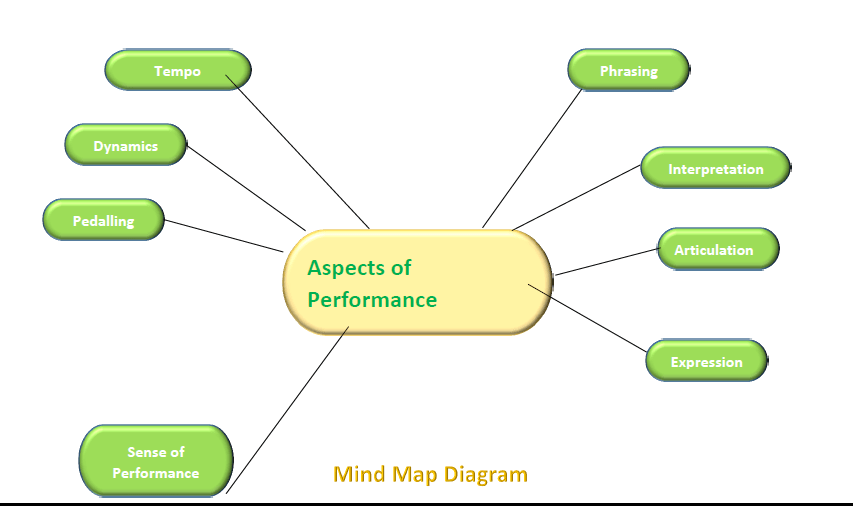
As Soledad mentioned above, we will liaise with each other regarding some interpretative decisions we make. These will be listed in our statement. Here are some key aspects we must take into consideration. Tempo of course is of paramount importance as we must play the duet in the same tempo, despite us playing individually.
Upon Reflection of the Module (Soledad)
As Darragh has previously explained, participation in this module has become a very positive and interesting experience as a performer.
Generally, most of the pieces that we play as pianists belong to composers who have passed away (including those compositions not very correctly called “contemporary”, works by composers such as Schönberg, Webern, Crumb, Ligeti, Messiaen and a long etcetera).
On the other hand, on other occasions, even if the composer is alive, you rarely have the opportunity to work directly with him or her, and even less do you have the possibility of working side by side from the beginning of the composition.
Indeed, currently the relationships between composers and performers are tightening, all contributing to the creation of the work.
Furthermore, these relationships go beyond national borders. As Darragh indicated, our different backgrounds as well as our current situation are not and have not been an impediment, in any case an incentive and a way to enrich our work.
For all these reasons, I am glad that I had the opportunity to have participated in this collaborative creation and I also wish in the future to be able to debut this piece as it deserves, being able to play it in public with my fellow piano performer and with Pàdruig listening to it live.
Module Reflection (Pàdruig)
This module has been an insightful and successful process through which we have all gained and learned something new about our individual and collaborative practices, despite the latter disruptions of Covid-19. As both Darragh and Soledad have commented above, the process which we have undertaken to take a piece from inception to performance is one which today is commonly found to be symbiotic – and through such a process, the compositional and the performance concerns are all better understood by all parties.
From a composer’s point of view, it is useful to know that performers will feel ownership over a piece of music, so that they are invested in it to the degree to which it will receive ample time, commitment, and depth of understanding. It is also of vital importance that a piece may be playable, and thus that performer concerns may be discussed and aptly considered. It is within the composer’s direct interest to reach for new sounds and vehicles for expression, but (in most cases), these should be achievable in performance, indeed to the premiere performers, and to all potential future performance relying solely on the timeless article of the score.
I am pleased to have worked on this piece with Soledad and Darragh, and to know that we have together written a piece which has dealt with three different streams of influence and input, as well as three different sets of criteria in production and completion. I very much look forward to hearing this piece one day in performance!
 MU625 Pàdruig - Soledad - Darragh